S1, Episode 8: Borrowing secrets revealed - Inside the approval process
What does a lender actually look at when you apply for a loan, and which factors matter most? Sebastian Watkins and Julian Fayad break it down.
3rd December 2025
Duration: 33 minutes
These Four Walls
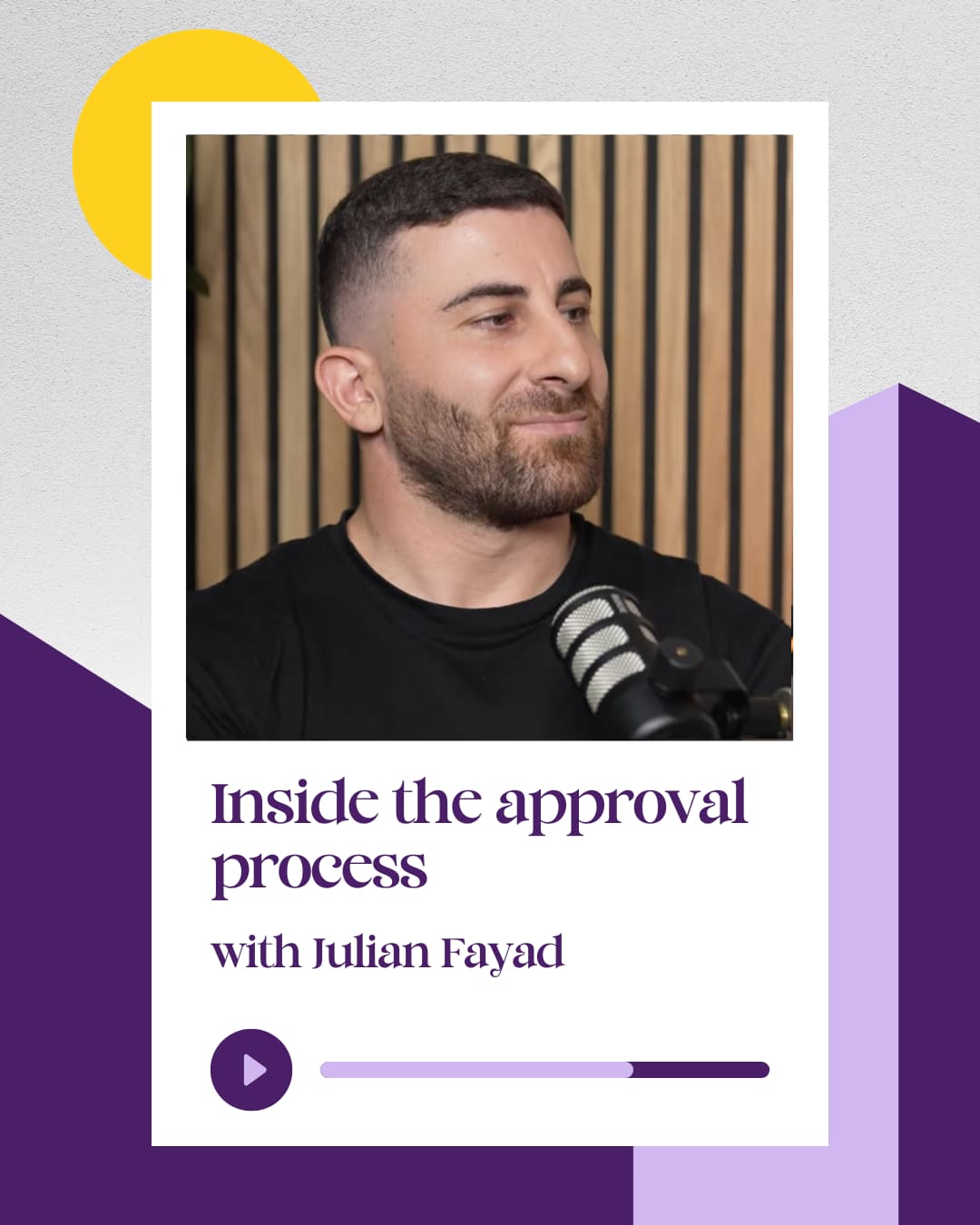
S1, Episode 8: Synopsis
Guest: Julian Fayad, CEO, LoanOptions.ai
Host: Sebastian Watkins, CEO, Lendi Group
Applying for a loan can feel unclear, but many parts of the process are more structured and within your control than you might expect. Sebastian speaks with lending specialist Julian Fayad to unpack how assessments work, from credit history and open banking to how everyday spending is viewed.
They address common myths, the growing role of artificial intelligence, and the factors that may influence your borrowing position. The discussion offers practical guidance on what lenders look for and what applicants can review before they apply.
If you want a clearer understanding of how lenders evaluate applications, this episode provides concise, helpful insights.

Show notes
About Julian Fayad, Founder and CEO of LoanOptions.ai
Julian Fayad has built a reputation as a forward thinker in Australian lending, bringing together more than a decade of asset finance experience with a strong background in technology. He began coding apps at 18 and later worked across finance roles that gave him clear insight into how slow and complex traditional loan processes could be.
He founded LoanOptions.ai in 2020 to create a faster and more transparent way for Australians to compare and apply for loans. The platform uses artificial intelligence to analyse borrower information and lender criteria, helping users see suitable options without unnecessary friction. Julian has also led the development of tools such as the AutoComplete Engine which streamlines applications by reducing repetitive data entry.
Julian is known for his practical approach to innovation and for building an inclusive, collaborative team culture. His focus remains on improving the lending experience through technology that supports fairness, clarity and ease of use for borrowers.
[PODCAST STARTS]
What are lenders actually checking and how can I avoid surprises like that. Before it was very heavy leaning towards credit score, now they're actually able to look at banking behavior. Let's talk about spending habits to what can harm and what can help your profile when it comes to applying for credit. Make sure that you set yourself a budget and that you are saving a significant portion of your money. The general rule is… I did want to ask you about maybe the most surprising thing you've seen on the home loan application. The things that are super personal, like there might be subscribe to certain things, like Only Fans.
Welcome to These Four Walls. The podcast that talks to real buyers and experts are the hardest, widest and most surprising parts of buying and owning a home in Australia. We'll help you figure out what's going on in the world of property and what to do next. Hi I'm Bas and this is These Four Walls. Today applying for a loan can feel like a little bit of a mystery. What data are the lenders looking for, why, what are they going to do with it, and what access to information do they need? Today to help us unsolve this mystery, we've got Julian from Lone Options AI, who's going to help talk us through some of the process.
Before we get started, I did want to talk a little bit about a listener letter that we've had from Sophie in Newcastle. Sophie says, my loan got delayed because of something in my transaction history. What are lenders actually checking, and how can I avoid surprises like that? So to help us answer that question, Julian, thanks and welcome to the show. Thank you very much for having me.
Fantastic. Look, let's start with something simple. Obviously, open banking has changed what borrowers need to understand about applying for a loan in their finances. Can you talk to us a little bit about how that looks today? And what maybe let's start with what is open banking? Yeah, so essentially it's a, an A-triple C regulated framework for customers to connect and provide their bank account data to lenders, banks, financial institutions, or any other approved recipients. And what it's designed to do is improve the consent process for the customer and give them great visibility and transparency on who's accessing what data. And then on the lender side, it's designed to make sure that they can get access to the raw data without any potential intercepting. So it's a security thing, but also it's an anti-fraud mechanism as well.
So, I think the cool thing about open banking is what it's done is allow banks and lenders to look beyond the traditional credit policy requirements. So before, it was very heavy leaning towards credit score and things like that and employment history and all those traditional credit things. Now they're actually able to look at banking behavior and that is a double edge sword because it can be both. Oftentimes these days we tap our phones and we just put everything on, you know, on these payments. We have so many different subscriptions coming out and provided everything is very straightforward and, you know, you've got your transactions and your spending habits are well dialed in or at least there's a moderate level of discipline there, it's not a problem at all. They're not trying to critique or criticize the fact that you, what type of coffee you ordered six months ago. It's not about that. And in a lot of times, they just get categorization of data. It's more the concerning transactions that you need to be really wary of.
Sophie's point about potentially getting a loan-approval delayed could be things like any problematic transactions. It could be potential gambling or sports betting. It could be large cash withdrawals and the reason is cash withdrawals then don't give the lender visibility on what you're actually spending. Is that a general living expense or is that for gambling or for, you know, other things? And so just that uncertainty where it might trigger the lender to have to make those further inquiries.
Look, I do want to talk about that in a little bit, but before we get there, talk to us about credit score. It's the sort of all-holy, all-mighty number that a lot of people will hang that hat on, but how important is it? And how should I be thinking about a credit score if I'm looking for a loan or an auto loan?
Yeah, well, the first thing is awareness. I think credit score is really important, and there's lots of great tools available on the Aussie website. And I think, you know, what you can do is just understand what your credit score is and that's the first step and then obviously you can understand how to improve that. There's a lot of things that go into the credit score. One of it is the amount of credit inquiries that are on your file and then also your repayment history on specific credit contracts, whether it's mortgages, personal loans, credit cards. And as long as you keep making your repayments on time, and usually if there's a direct debit set up, as long as there's money in the account, you never have to worry about that.
But the credit score is really important. A lot of lenders in their credit assessment process have minimum cutoffs and the higher your credit score is the less risk you are to a lender. And I think the key part there is that there's so many other factors that go into making that credit score and it is a little bit of a black box so they're not able to tell you exactly how or what metrics go into making your credit score exactly what it is. But the general rule is number of credit inquiries, the types of credit inquiries that are on your file and the recency of those inquiries.
So if you have lots of recent credit inquiries and if they're back-to-back-to-back, that's likely to lower your score. And why is that? Well, it shows some kind of credit or financial distress and if you're needing access to credit and you've got multiple recent credit inquiries it shows that there's some kind of, you know, to them some kind of distress. But it also shows that maybe you were declined from a lender on the first try and then went to a second and a third. And so there's that component and then there's also the regularity of your data.
If you're moving address constantly, that is a sign that goes into their risk model and if you're changing jobs very frequently, most people don't know this, but your address history and your employment history actually do get stamped on your credit file when you apply for credit. So if I'm working at an employer A, let's call it, and I apply for a personal loan today, and then in three months time, I apply for another loan, but now I'm working at a different employer, those date stamps and time stamps are on the credit file. And so if you have the same employer for a really long period of time, that shows a great level of consistency or regularity in your credit file and therefore your credit score is likely to increase.
OK, so if I'm to do three things over the next 12 months to get myself a good, healthy credit score, what am I doing? So make sure, firstly, all of your payments are made on time, and I would probably start by looking at your credit file, your credit score. You can get a free copy via the credit bureaus or you can use great tools that Aussie has available. And I think then what you would then do is just make sure that all those payments are set up on direct debits, you make sure that you know exactly what days they come out, set reminders to ensure that there's money in those accounts.
And then probably what I would do is make sure that I'm trying to, if I'm building towards applying for a home loan, I would make sure that I'm getting that consistency in my job and getting that consistency in my residential address. If I can stay in the same place for a longer period of time, that will certainly go into it. But the key thing there is in a 12-month span, the most important thing you can do is just make your repayments on time.
Yeah, and I think the thing that you said that resonated there is just the frequency of application. So a lot of people will say, okay, I'm gonna put an application in here and here and here, and perhaps they don't fully understand that that has potentially a negative impact on their credit profile downstream because the lenders could view that as either access to lots of credit or frequent declines or a combination of both, right?
Yeah, and there's a little bit of what the lenders do: they almost look at you in a different lens if they know that other lenders have said no to you. It might be that they're trying to understand why did the other lenders say no and, you know, we're a bit concerned here. But in terms of making sure that you don't put too many inquiries on your credit file, that's why it's so important to use a broker. And I think what the broker's role is is to understand your specific credit profile. There's, I don't know, well over 100 banks and lenders in the country. A broker's job is to find the lender or bank that is best suited for your specific credit circumstances.
And in that case, that means they will act more like — for lack of a better term — a sniper versus spraying many applications to many different lenders. It's like, find the right product that meets your credit profile, submit once, get it approved once, and that maximizes the return on your credit score.
I mean, I think a bad credit score also doesn't mean no. It just means maybe a different lender, right? So it's about understanding all the inputs. Well, I think there's a lot of misconceptions around credit score. They think just because they haven't taken out a loan that they have a good credit score. It doesn't actually work like that. So when you have no credit score at all, the first time you apply for credit, it's more like you end up in the midway band. So it might be somewhere between 550 and 650 of a possible 1200. And so oftentimes when people are applying for their first loan, they say, oh, but I've never even had a loan, I must have a great credit rating. So that is a misconception.
And just in terms of having good income, it doesn't necessarily guarantee you an approval. There's so many other factors that go into assessing a loan. And if you've got great income but you've only been in the job for one week and you've decided to apply for credit, that's going to be something that whilst you've got great income, they haven't seen the regularity or the consistency there. The other one is all incomes are not equal. So, for example, bonus or overtime income might have different treatments to full-time regular salary, and it doesn't mean it can't be accepted, but that's why it's so important to speak to a broker.
You see that happening, right? Well, I made X number of hundreds of thousands of dollars, but okay, half that was bonus, there was some commission income, it only had been in the job for 12 months. All of this sort of… they're important factors into the credit decision, right? It's not just as simple as money in and a good credit file. Absolutely.
Okay. So, shifting gear a little bit, let's talk about spending habits. What are some everyday habits? Do you think lenders look at those habits around spending? Are they looking at your transaction history? If so, what can harm and what can help your profile when it comes to applying for credit?
Well, there's a few components to this, so let's start with the good ones. I think one of the best things that you can do if you're about to apply for a loan, one of the best things that you can do is do some early research about roughly what that repayment is going to cost you, and then start putting away at least that amount in savings in a separate account. And what that's going to do is show very clearly that you're able to genuinely save at least the loan repayment. And that's going to be, from a bank conduct perspective, best practice to demonstrate to the lender that you've been able to easily save that.
I think that's a great one. I think, you know, as many books that people read about The Barefoot Investor or anyone of bucketing your money, I think the most important thing is to make sure that you set yourself a budget and that you are saving a significant portion of your money. It's very easy to just spend and do retail therapy and buy online and, you know, I swear that the algorithms on social media these days are so accurate. I'll think about something. I'll have a dream about something, and I'm getting served with ads. So I understand the temptations are always there. The best thing that you can do would probably be to not buy anything as soon as you see the ad, wait 24 hours, set yourself a reminder. And if the product is still important to you 24 hours later, then buy it. That's probably a pretty handy tip.
That's good advice. I'm going to write that one down. The amount of stuff we have turned up at our door, where I've just been caught by something and you often think, I was just thinking about that and I've got six pairs of board shorts to pay… all the same color all turning up at the same time. Okay, great.
And what about something that could harm my application? Cash withdrawals at pubs. Cash withdrawals of a certain dollar value that might indicate that people are spending their money on unscrupulous things. So those are some basics. I think also you've got to be careful not to… I guess one of the things that people do, and it's kind of awkward to bring this up, but some people will use their bank account, whether they're a company owner or a PAYG, for things that are super personal. Like they might be subscribed to certain online content creator style things like Only Fans or, you know…
For the cooking shows? I think you just… the key thing is like, some of those things are like, you're asking the bank or lender to lend you a significant amount of money. And oftentimes the lenders will ask us, would you lend this client that amount of money, as like a bit of a… and they're just looking for character. And it's not to say that you're a bad person if you do those things, but you certainly want to put your best foot forward.
And I think the number one thing that we see harming people's applications would be sports betting. It seems to be really, really popular and very socially acceptable in our country. And oftentimes it's not problematic gambling. It's more social, like oh my favourite team's playing or whatever, and I totally get that. We're not here to judge you, but you just want to make sure that you're putting your best foot forward, and where possible enjoy the footy game or whatever it is that you're watching and have a beer with friends, but try and avoid doing that, especially if you are about to embark on a big financial commitment.
And so is your thinking there a little bit of say sports betting is fine, but when you're starting to see behaviors, maybe repeated sports bets over certain days of the week… you know, I had heard from a lender you can see patterns of behavior around cash withdrawals at large pubs going into late at night, multiple swings of betting over the weekends etc to perhaps a point that would be considered unhealthy. That's what they're looking for? Or is it just a blanket rule on sports?
No, no, definitely looking at more specific behavioral stuff and that's one of the challenges with open banking and this sort of providing your banking data is that they do have a deep insight or at least a lot of visibility on what you're doing and they are looking for those behavioral patterns. If you gamble a little bit and then your next lot of gambling is twice as much and it looks like you're chasing, that's certainly something of concern because it shows more problematic behaviors.
But the other one that we see a lot is people taking out small cash loans and that's a real problem. Those lenders are all over the internet and they've got very good marketing and advertising to prey on people. And I use that word very deliberately because they are predatory loans. They're extremely high interest rates. The only thing they really offer is the ability to get access to money really fast. And there are many solutions that are out there that maybe are not exactly as fast but will get you a much better, more fair interest rate if you do have those sticky situations where the car's broken down or things like that.
And those types of predatory loans or cash loans or payday loans — they've got a few different names — those types of loans dramatically decrease your credit score and often lenders have policies around declining, instantly declining customers who have those types of credit inquiries or if there's, you know, on the bank statements, there are those cash deposits going in from those payday… interesting.
Did they look at that the same way as say an Afterpay or a Zip or a Pay in 4 instalment provider? They're actually more frowned upon than those Afterpay and buy now pay later solutions and they harm your credit score a lot more than those do. The buy now pay later is oftentimes… they hurt serviceability more than anything else because, you know, the lender assumes that you're going to have — even though they're Pay in 4 installments — the way they have to assess a loan is that you're going to continue to use those facilities ongoing.
So if you've got repayments that are a couple hundred bucks a month in Afterpay, as an example, again not singling out any one provider, but the key thing there is that the lender is going to look at that and say, okay, well, that's a couple hundred dollars a month that we have to allow for ongoing. And the challenge there is that could impact your borrowing power quite significantly, especially for a home loan.
Interesting isn't it because a lot of the time those purchases are paid in four for convenience, not because it's a cash flow constraint. So, you know, you go buy a new pair of jeans or whatever that might be and you can pay for it in four, why not. But I think what a lot of people may not realise is that if you're starting to get your profile ready for a home loan application or an auto loan application, that perhaps they should be having a think about what they're putting on those Pay in 4 instalment plans.
And is it that you're allowed the account in general, or is it just that you can't be purchasing or showing purchasing behavior on those programs? Well, interestingly, when you apply for an account, they don't always show on the Equifax credit report. Actually, a lot of them are sitting on the Illion credit report, so the lenders won't always have visibility depending on which bureau. Some of them use dual bureau, which means they can access both credit files. Where possible, you want to try and avoid using those facilities if you can.
Again, the situations — car breaks down, those kinds of things — all those kinds of emergencies where it makes sense to use them because they're an interest-free product and essentially the vendor is paying. But the concerning trends that I've seen… you know, I'm 33, so I've kind of grown up in the age and spent money in the age before Afterpay, and I've avoided using those buy now pay later services as convenient as they sound and things like that, and I'm kind of glad I did. And one of the reasons I'll say that is it changes your buying behavior.
I'll give you a specific example. I heard someone in our team say, well I was going to buy — let's just say — a dress and the dress was going to be $400 paid in four installments. I can afford $100. And so now instead of buying a $100 dress for a party or an event, they're actually spending $400. So they're increasing what their actual budget is, and they're just saying future me will worry about that. And so it's just perpetuating people spending more money than they actually have and certainly not helping the rising cost of living.
And I'll give a unique perspective on this that probably most people don't talk about. The vendor has to pay for that interest component. So it's free for you maybe, but it's not free for the small business who's selling you that particular product that you're using it on. And so what do they have to do? They have to assume that basically all or most of their customers are going to use these facilities. So what do they do? They increase their cost. So now what was a $70 dress is now a $100 dress, as an example, because they have to allow for that margin. And so everything you're going by — a t-shirt now — like you're not spending less than $70 for a t-shirt, you know, before you might have spent $40 or $50. And so it's just because these retailers have to account for people using these services where they have to pay Afterpay or one of the other facilities.
You guys look stuck. Bit like trying to buy a bigger home. You know, Aussie brokers like, what are you here? Hi, Monica. Can work out your budget before selling. So you can get unstuck. Chat to an Aussie Broker today.
Interesting. Well, I did want to ask you a question about stuff you've seen on the homeloan application. Now, obviously finance, very serious topic. But I was hoping you might be able to go off piste for me a little bit here and talk to me about maybe the most surprising thing you've seen either as a declared expense or maybe on a submitted document. Well, we see lots of funny stuff and, you know, keep in mind this is a family show. Yeah, we'll make sure this is PG, thank you.
And there's certainly a lot of stuff that we see that wouldn't make this show and then maybe that's for a conversation later. But I would say the funniest things that we see — and often it's just transactions between mates, maybe they're splitting dinner or something like that — but the way they label the transaction is something very inappropriate. And it could be a comment about that person's mother or it could be a comment about something else. And it's just… I mean, it's funny and I'm all for good humor. I don't think any… as long as you don't put anything in there that's illegal activity. I don't think the lenders have a good sense of humor as well. But that's one thing that like we have seen it all.
The other one is just the people supplying required supporting documents. So there's a couple of funny stories. Of course, we deal with customers, as you guys do, that are from all backgrounds and ethnicities. And what happens is sometimes English is their second language and we're doing our best to communicate the requirements. And so we wanted a proof of identification and an acceptable form would be a driver's license. And I guess maybe the inbuilt translation features didn't work quite well enough, so it basically just said proof that they can drive. And so the person sent us a photo — and we're asking for their license — of them driving. Yeah. And so that's like one funny example. There's many, many similar ones.
The other ones that we can probably talk about is still PG, but sometimes there's, you know, we have a pretty young team and so our team are a mixture of males and females. And, you know, there's a young man who's looking to get a loan and he thinks that maybe flirting his way might improve his chances. And — that's my next question — so the young man says to one of our brokers, she asked for a supporting document and one of it was a selfie ID. So some of the lenders require the client to take a photo of themself, their face, holding their drivers license next to their face, and it's just like a liveness check.
And so occasionally the guys will not be wearing a shirt. And I think they really feel themselves. And anyway, the funny part is… that’d get me a decline. The funny part is like, you know, it's all in good humor and they're trying their luck and being a bit flirty. And I think maybe if they see a bit of muscles or something they might… but, you know, sometimes it's just — to be a bit funny here — like, put your shirt back on, mate.
That's good. Oh, that's good. I hadn't heard that one before, but I'm glad for all of our listeners that is not a way to get a fast track to approval. So clothes on for selfies please. Some of the girls are funny about it as well, like yeah, like get asked on a date or something like that and say no very politely and keep the relationship very professional. But, you know, behind — not to put them on blast — but yeah, behind once the phone is hung up, it's like, not with that credit score, buddy.
Okay. Let's talk a little bit about AI. Obviously, it's an incredibly fast-moving space at the moment. It's sort of once in a generational shift in terms of the technology and what it's doing for our business, but also just how it's changing consumer behaviour around all things from search to finance to everything in between. Talk to me a little bit about your thoughts on this. Obviously, loanoptions.ai, it's a big part of your business, but what does it mean for the consumer? How do we distill that down into the what's in it for me? I'm a consumer. How is this making my life better?
Well, it's essentially us giving the ability for the client to apply in the most seamless way possible. There's a whole bunch of really cool technology that we've built. It allows the client to apply in three easy steps. Step one is upload your license. Step two is connect your bank account through open banking or similar platforms. Step three is to provide a pay slip. Instead of filling out all of the form manually — your name, your date of birth, all the boring stuff, your employment, how long you've been there, all these kinds of things — our AI reads, analyzes and contextualizes all of the documents and then prefills over 80 percent of their information for them.
So that's a very specific way, a very tangible way that we're helping customers. Instead of an application that might normally take half an hour — 20 minutes if it's a good one, an hour if it's a bad one — it's a five-minute process now. And in real time, if someone's applying for a car loan, not only will they be able to apply very seamlessly, but our AI algorithm will match them with the most suitable lender based on over 90 lenders that matches their credit score, their employment history, their specific circumstances. And it's unbiased in terms of how the lenders are ranked, because the customer tells us what's important to them as part of the process, and then we rank the lenders according to their priorities.
So, would you say it's speed and accuracy? Speed, accuracy. And also, I think the other point that probably goes that I think is really important to discuss is it's not totally AI-driven. It's AI to help onboard and do that initial process, and then really skilled accredited licensed finance brokers that hold the client's hand through the rest of the process. And so it's about making sure that our team are spending most of their time answering questions, helping build the strategy, helping talk about the loan structure and the pros and cons of each one. And so it is about making sure that the brokers have more time to deliver personalized service.
So it's speed, accuracy and personalization, I would say. So humans for the complexity and the trust and then AI for the speed and the scale, the automation. Absolutely.
Okay, so we are getting to time. This has been super helpful and really insightful and I love the stories around the selfie. But before we wrap up, I did want to just ask one last time. I'm a customer, I'm looking for a loan. What can I be doing to take the guesswork out of it? We've talked about getting credit worthy. We've talked about spending behaviors and habits. Am I looking good for an approval or is there anything else I should be thinking about?
The number one thing I think most people should do before they even think they're ready for a loan is just to have a conversation with a trusted advisor, their broker, and the reason I say that is they can help get you financially fit already, and they'll tell you all the things that a lender is going to pick apart. Then you have time to execute that strategy that they give you. It might be that you need to start putting some money aside and show that you can build genuine savings. They'll probably build a savings plan for you and say, you're going to need — based on the property you would like to buy or whatever it is that they're looking to do — we're going to say that you need this amount of deposit saved with all the schemes and do all the calculations for you, take the guesswork away.
I guess that can be quite calming, right? Having that plan. I mean, we all have — we either know someone and certainly we come across them in our business every day — the impulse buyer, turned up to an auction, put a bid in and is not finance approved. I can imagine that's quite anxiety inducing, certainly it is on our side as… that's living life on the edge, telling you. That would not be how any trusted advisor would recommend that somebody goes away. No, no, definitely not.
I think the part there is like they will provide that calming voice, but also I think the actual process of talking to an expert… I mean, you wouldn't try and do your own dental work or you wouldn't try and go and do the job of an electrician on a live power supply. To think that there is over a hundred different banks and lenders in the country as an example, and that you rate your own chances of picking the right lender, the right product… it's an extremely low percentage. And you might get it right and get an approval, but it's way better if you talk to a broker. There's a reason why nearly 80 percent of what was done through the broker channel, and it's because they are that trusted voice and they're there to keep the banks honest and they're there to be in your corner. And I think that's one of the reasons why I love being part of this industry so much. It's super rewarding isn't it?
Okay last question: if you could change one piece of the process, if you get it your way with a magic wand, what would you do? That's a very good question. I would love to see… look, as an industry, we weren't always known for being the most tech focused or the fastest to adopt tech, you know, took so long for them to adopt digital signatures on loan contracts and things like that. I think we're headed in the right direction now and I think ours will prove to be a very good transformational process for our industry.
If I could change one thing right now, I'd love to see a bit more auto decisioning and transparency on auto decisioning. So I just think that's going to give clients a speed to go out and do the shopping. You know, get to that pre-approval as fast as possible. I think right now there's so much effort and time and energy that's spent trying to workshop and find the right solution and package it a certain way. If we get to the point where the SLAs are almost instantaneous, then instead of weeks or days — some lenders it could be up to 28 days — a lot of what we have is there, isn't it? It's rather a formulaic approach for certainly the vanilla, for want of a better word, loans.
There's some lenders that do it really well, and look, I probably… because we're building so much technology in this space and we've already kind of chipped away at all the big pain points, the next thing, I think, is probably that, you know, just the gateways to getting an approval: the fastest time to yes, and then the fastest time to settle. And that's kind of the next step.
Yeah. Okay guys, well you heard it here. If you're looking for a loan, make sure you've got your plan in place and understand what story your data is telling. Most importantly, speak to a professional before you start the process and get that plan in place.
Okay, so that's it for this season of These Four Walls. If you've got a question or a query or you want to know anything about home loans and buying a property, DM us at Aussie Home Loans. We'd love to hear your story and you could be featuring on next season. Thanks again and thanks Julian. Thank you for having me.
These Four Walls is brought to you by Aussie. Like and subscribe on YouTube, Spotify and Apple podcasts for new episodes every week. For more information see the show notes to this episode or visit Aussie.com.au. The information provided during this podcast is for general informational purposes only. Aussie does not provide financial or investment advice. The information in this podcast does not take account of your objectives, financial circumstances or needs.
[PODCAST ENDS]
Related content
Content you might be interested in based on the topics discussed in this podcast episode.

How to boost your borrowing power before buying your next home
Thinking about upgrading your home? With the average new mortgage in Australia now over $659,922, knowing how to increase your borrowing capacity is essential.

Home loans 101: How much can I borrow?
Find out how to increase your borrowing power so that you are ready to buy a home.

Borrowing Power Calculator
Get an idea of how much you may be able to borrow to get started on your property journey.
The information provided during this podcast is for general informational purposes only.
While we make every effort to ensure the accuracy of information, Aussie makes no guarantees, warranties, or representations regarding the completeness, accuracy, reliability, or suitability of the information. While Aussie may refer to our products or services, such as finance or insurance options for you, you are under no obligation to take out any co-branded or referred products and services.
Aussie does not provide financial or investment advice. The information in this podcast does not take account of your objectives, financial circumstances or needs. We recommend you seek independent financial, legal and taxation advice before making an investment decision.
Credit activities provided by Lendi Group Distribution Pty Ltd ACN 105 265 861, Australian Credit Licence 246786.
Aussie does not provide financial or investment advice. This material does not take account of your objectives, financial circumstances or needs. Aussie recommends that you seek independent financial, legal and taxation advice before making an investment decision.
IMPORTANT INFORMATION: Any information provided does not constitute an offer of credit and are examples of what may be available to you based on the information available. It does not take into account any product features or any applicable fees. Lending criteria and the basis upon which we assess what you may be able to afford may change at any time without notice. For Fixed Rate home loans, break costs may be payable which can be significant if you change the whole or part of your fixed rate loan or where additional or early repayments are made during the fixed rate period.
*Aus. res. 18+ only who have met specific eligibility criteria. The Promoter is Lendi Group Distribution Pty Ltd, L28, 225 George Street, Sydney NSW. Starts 09:00am AEDT 23/2/26. Ends 11:59pm AEST 31/5/26. Weekly draws: 10am (local time), 4/3/26, 18/3/26, 1/4/26, 15/4/26, 29/4/26, 13/5/26, 27/5/26, 10/6/26, Plexus, Level 9, 628 Bourke Street, Melbourne VIC 3000. Weekly prize: $1000 cash prize via EFT. Max 1 weekly prize/person (excl. SA). Grand prize: a new 2026 Toyota Rav4 Hybrid Cruiser - AWD 2.5L Auto CVT in Frosted White. Grand prize draw: 12pm AEST, 5/6/26, Plexus, Level 9, 628 Bourke Street, Melbourne VIC 3000. Winners will be published on http://www.aussie.com.au/about-us/promotions within 7 business days of drawer dates. Entrants will receive future direct marketing from promoter. See URL for Terms and Conditions. NSW Authority No.TP/04223. Permit No's: ACT 26/00290 & SA T26/209
^*Source: CoreLogic February 2025 Index and Lendi Group Rates based on our Generally Available Criteria. Repayment based on a $650,000 variable loan at 6.20% p.a. over 30 years. Interest savings calculated using a comparison between 6.20% and 5.65% rates over the life of a 30-year variable loan with consistent repayments. Scenarios are for illustrative purposes only and may not apply to your situation. Not all lenders are available through all brokers.
**Not all lenders are available through all brokers.
^Individual lenders may charge fees to the customer.
^^All applications are subject to lender assessment and approval. Cashback offers may be provided by some lenders and may only be available for particular products, terms and conditions apply. Not all products are available in all states and territories.
Door to More Competition AU18+ only. Ends 29/6/25 11:59pm AEST. Entry limits apply (see full T&Cs for details). aussie.com.au/home-loans/door-to-more
We are committed to protecting customer privacy and do not sell customer information, please refer to our Privacy Policy for more information.
Our mission is to help Aussies reach their property goals faster. We can compare thousands of home loans from over 25 leading lenders.
© 2026 Lendi Group Distribution Pty Ltd ABN 27 105 265 861 Australian Credit Licence 246786. Lendi Group Pty Ltd, which is the ultimate holding company of the Aussie and Lendi businesses, is owned by numerous shareholders including banks such as CBA, 1835i (ANZ's external venture capital partner) and Macquarie Bank, the Lendi founders and employees, and a number of Australian institutional investors and sophisticated investors, including UniSuper.
Credit for the Aussie Bridge products are provided by Bridgit Financial Services Pty Ltd ACN 648 580 901 Australian Credit Licence Number 532542
Information regarding listing numbers are supplied by Lendi Group Services Pty Ltd (ABN 44 162 394 881) and related entities on behalf of RP Data Pty Ltd trading as CoreLogic Asia Pacific.
Lendi Group Distribution Pty Ltd | Level 28, Grosvenor Place, 225 George Street, Sydney NSW 2000
Back to top
We acknowledge the Traditional Owners of the many lands where we live and work and pay our respects to Elders past, present and emerging. We celebrate the stories, culture and traditions of Aboriginal and Torres Strait Islander Elders of all communities from the many lands where we live, work and gather.
© 2026 Lendi Group Distribution Pty Ltd ABN 27 105 265 861 Australian Credit Licence 246786. The Lendi Group Pty Ltd, which is the ultimate holding company of the Aussie and Lendi businesses is owned by numerous shareholders including; banks such as CBA, ANZ and Macquarie Bank, the Lendi founders and employees, and a number of Australian institutional investors and sophisticated investors including UniSuper.