S1, Episode 3: Dream home, nightmare break up... what happens to your mortgage?
Mortgage broker Sam Harvey unpacks what happens when relationships end but the mortgage remains. From refinancing to selling, and how to avoid financial fallout if love turns to loss.
29 October 2025
Duration: 25 minutes
These Four Walls
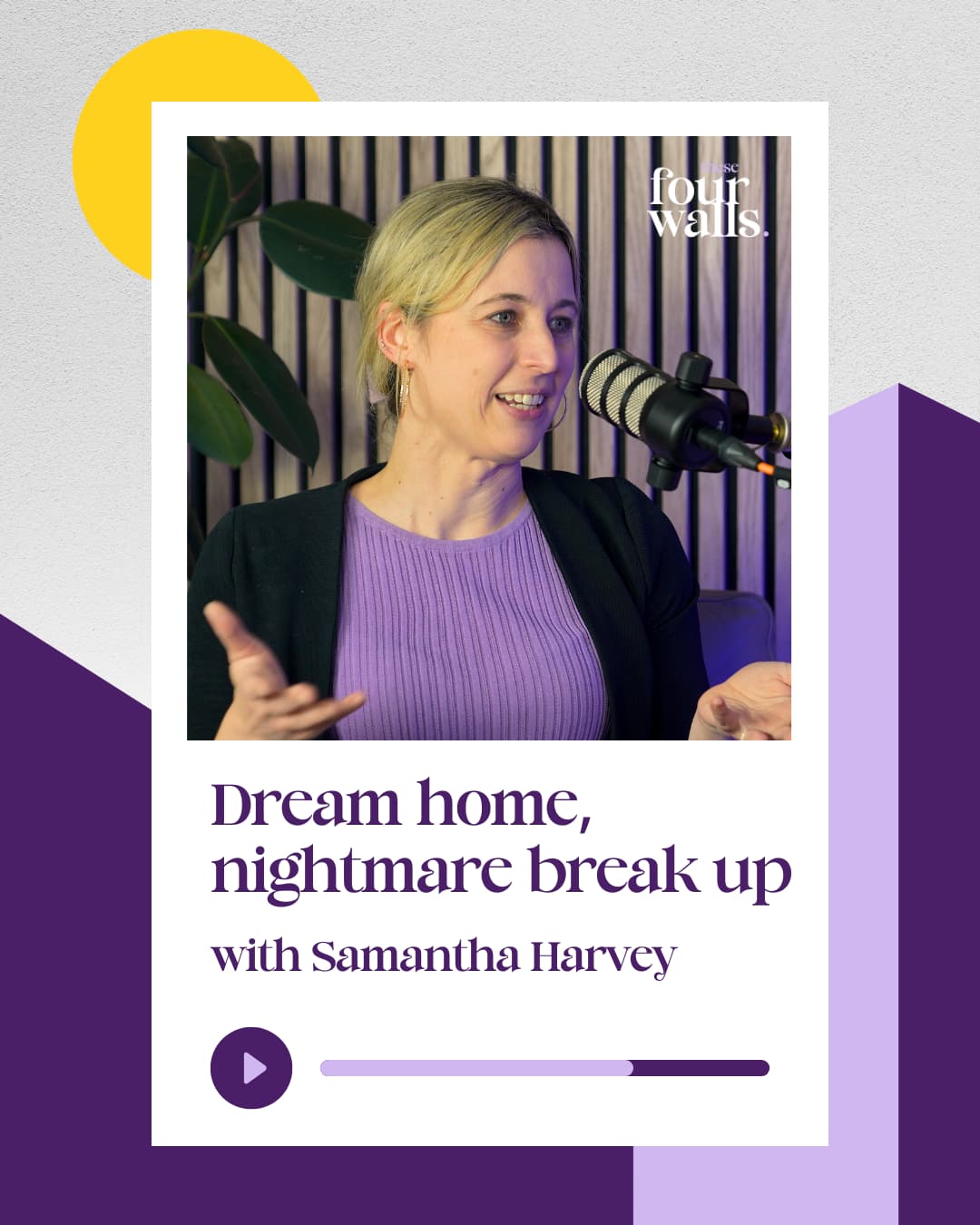
S1, Episode 3 Synopsis:
Guest: Samantha Harvey, Mobile Mortgage Broker
Host: Nabilah Mahmud, Lendi Group
When relationships end, the mortgage doesn’t disappear. Host Nabilah Mahmud speaks with mortgage broker Sam Harvey about the financial and legal realities of breaking up while sharing a home loan.
We discuss everything from how joint mortgages are structured, what to consider before refinancing, and how to decide whether to sell, buy out, or co-own post-separation.
If you’re buying with a partner or separating from one, this episode helps you understand your options before emotions take over.

Show notes
About Samantha Harvey, Mortgage Broker
Samantha Harvey is an award-winning Mortgage Broker and experienced property investor. Recognised as a Diamond Broker (2022–2024) within the Aussie network, she ranks among the top 2.5% of brokers nationally.
With a background in property investment and client mentoring, Samantha works with first-home buyers, rentvestors and investors to develop tailored lending strategies that suit their goals and financial position. She’s known for her straightforward, supportive approach and focus on helping clients make confident, well-informed property and finance decisions.
[PODCAST STARTS]
00:00 This is where it can get messy.
00:02 Does that affect your future borrowing with new partner?
00:04 Yeah it does.
00:05 say the mortgage is $500K, you're liable for the $500K.
00:06 If blah blah stops paying, I think I was pretty lucky.
00:11 Chat to my ex-husband,
00:13 Welcome to These Four
00:20 Walls,
00:21 the podcast that talks to real buyers and experts about the hardest, weirdest, and most surprising parts of buying and owning a home in Australia.
00:21 we'll help you figure out what's going on in the world of property and what to do next.
00:28 Hey, everyone, I'm Nabilah and you're listening to These Four Walls.
00:31 In today's episode, we talk about what happens when a relationship ends, but a mortgage continues.
00:42 Our guest today, Sam Harvey, a senior mobile broker at Aussie and we have a listener letter from Toby in Newcastle.
00:46 Toby says we bought our first home together in 2023. It was a fixer upper and then out of nowhere we broke up.
01:00 It's been six months and we still haven't figured out what to do with the house. Do we sell? Do one of us buy the other out? What do we do?
01:07 Hey, Sam. Hello. How are you? I'm good. How are you?
01:12 So you've heard that story? Yeah, I have. Is it something you’ve come across I’m sure many times? Unfortunately, it's not uncommon.
01:21 So I personally have gone through this. I got married a couple of years ago.
01:26 We were together for a while. We got married, and then we actually bought a house together. Yeah. I think maybe six months after we bought the house, we separated.
01:35 I remember the first thing I thought was what happens now? . So tell me, what are your options when you are going through that? What are the options you actually have?
01:47 It can be so different for so many different couples and, and how they navigate it. But the real options I guess firstly is I guess the obvious one is sell the property.
02:00 So you can sell. Secondly, you can look to buy one another out of the property if you're in a position to do so. And then thirdly, depends how amicable as well.
02:09 Right. If it's messy, it can get messy, but if it's amicable and the market's not perfect or maybe we'll rent it for a period of time or we'll do this reno, that's a possibility.
02:25 Maybe we'll keep it as an investment. So really, I've seen so many different ways it's handled depending on the couple.
02:33 It’s interesting because when I was going through it, I think my partner and I, we, my ex partner I should say, we were both obviously going through the emotional turmoil of a relationship ending, and we were in that part of, do we wait it out, see how we go, maybe we will get back together.
02:50 So maybe we keep the property. Do you see co-ownership? As much of a thing when this happens It really comes down to the individual circumstances and then what you plan to do and the family dynamic.
02:56 You can continue with the property as an investment, for example.
03:03 But typically
03:06 someone's moving out.
03:07 Someone's moving somewhere. Right? So what what are we doing? Where are we living? There's so much that comes up.
03:14 like, I had one lovely couple, separated.
03:15 But market in Sydney was at a downturn, so
03:19 let's treat it like an investment.
03:20 They were amicable enough to do that.
03:22 They did some reno’s. They rent it out for a period. The market turned, they sold, they’re happy, and both moved on with their lives.
03:29 I think I was pretty lucky.
03:30 Shout out to my ex husband.
03:32 We were super amicable.
03:35 Makes it so much easier. So much less stress. I mean, still so stressful.
03:42 Yeah, yeah.
03:45 So in our situation, we actually he actually decided to buy me out. Yeah. So he took over and he refinanced the home loan. And I know it was quite a stressful period for him. And one of the big things is when you're buying a home together, you're both obviously going into servicing so you can afford the property.
04:04 Can you then afford the property by yourself?
04:07 That's the question. And it's obviously one it's down to you and your circumstances at the time. I literally timely have a customer I'm helping right now. Separation.
04:17 Same situation.
04:18 We’re going through that assessment period now can you actually afford this on your own?
04:23 Move back in with family.
04:25 Wants to keep the property. That's the option. And the desire.
04:29 Worst case, it won’t, and the property will need to be sold. Because that's part of the court agreement. A lot of the times with these court agreements, they have a period of time in which they can get themselves organised.
04:40 And you mentioned time there, so I wanted to touch on that. Is there a time frame that you have to look into this after a separation?
04:49 The sooner the better. Sooner the better. Sooner the better. The main concern I always have with separations is pay the mortgage. Pay the mortgage, especially if it's messy. Do what you can, because it can start to impact you both negatively if you're not at least on the same page about that.
05:03 Just cover that as a minimum.
05:07 Mortgage repayments and the outgoings.
05:11 Sort the rest of it out afterwards.
05:12 Yeah, it's like “hey I'd like a divorce by the way we still need to pay this mortgage so you pay this much and I pay this much” like kids add a whole other dynamic to it.
05:13 Like I didn't have to go through
05:23 Yeah.
05:24 So whether who's going to stay in the family home but it's an interesting thing because they do
05:27 need to reach out to a broker first because they kind of got to gauge
05:28 Is it even possible?
05:32 Like I'm going to start speaking to the right people, but they need to speak with a bunch of people.
05:37 A question I remember having when I was going through this, say you do opt out, if someone buys someone out, how does that work in terms of, depending on how much deposit you pay, does that person who paid more deposit get more?
05:51 Or how does the, how do you pay that person out based on, how you bought the property?
05:56 There's a couple things to cover off here. So it comes down to how you've initially bought the property.
06:02 Default status is to buy as joint owners. Joint ownership.
06:05 50/50.
06:06 But in some circumstances there might be and this is definitely the rarer because the default is typically yeah we just buy together and it's not really thought about too much by people and maybe it should be.
06:15 With the
06:18 other way being tenants in common, if that's the way that that's drawn up,
06:19 or
06:24 there is
06:24 an agreement drawn up,
06:24 ahead of time then that would need to be taken into account in terms of the split.
06:25 So it might be percentage based, one partner might have put more money in than the rest, and they would have
06:30 had that to aid the next part of the discussion.
06:35 But let's just say the most common ways that they've, they've bought it together.
06:39 It's an emotional time period, but
06:43 like math is math,
06:44 You get a valuation done and typically you'll want to get independent valuations done.
06:45 Did you get independent valuations done?
06:50 I didn’t. Interesting. How did you come up with a I'm pretty sure it was a phone call.
06:54 like “So, the property would be roughly valued at this now.
06:56 And half of that would be this...” Now you're like thinking should I got one honestly I was like “Sounds good.”
07:04 These are all things I didn't know and will be great for our listeners.
07:06 That's okay I would say.
07:10 if someone who hadn't sought legal advice yet has come to me, I'd be saying, go get some legal advice.
07:17 Because even if you draw up a financial agreement, you need legal advice to do that, it's the easiest way. And you want that in place. I've had a friend who got separated. You run a risk, not having a financial agreement,
07:29 if I was to kind of break it down here.
07:31 So say you bought a property for $500,000. Yeah. So the valuation comes back as $700,000. So it’s increased by $200,000 over however long you’ve held the property for. At point of buying someone else out when it's 50/50. Would one partner just have to whoever is buying the other partner out have to get a refinance to increase the amount by another $100K?
07:54 Typically, yeah.
08:00 Because you've got to factor in the, the equity right that you've made in that increase. So you have to pay that other person out. But typically in these separation scenarios you're considering the whole financial position of the couple.
08:06 So there is that element to it.
08:13 But then there's also super and all these other assets that come available.
08:15 So that might be able to be negotiated as well. But if we're talking just the only asset you had together was for the property then. Yeah. That uplift would need to be split.
08:31 Is there anything you can do or any conversations couples going into buying a property you think they should be having before they sign the mortgage papers?
08:41 So I would hope that they're financially on the same page before they buy.
08:47 It is at the end of the day, a huge financial commitment you guys are making.
08:51 if you aren't on the same page, get on the same page.
08:54 If you need some education or you want to look into like the tenants in common instead of the joint tenants, which I
08:55 do you want me to explain that a little bit?
09:01 So like the joint tenants is the common one and
09:04 so what happens if one of
09:07 you passes away, for example, the other one just ends up getting the whole ownership of the property.
09:08 But
09:13 in examples, there might be a customer who has a huge deposit.
09:14 They've met their partner. They're putting in a chunk of the deposit. They want more ownership of the property. So they wanted to do tenants in common. And that split can be whatever you guys want it to be.
09:28 There's nothing wrong with with putting something in place like that and having those conversations, especially if this person is going to be,
09:30 you're marrying them, you want to have these tough conversations beforehand.
09:35 I don't think anyone ever goes into a marriage, or goes into buying a property together with the idea that they're going to break up.
09:40 So it is something that's hard to have, but the reality is three marriages in Australia break up.
09:46 Do break ups affect your credit score at all?
09:53 They 100% can. Tell me more.
09:58 If it's messy...please like I said, please try to make your minimum repayment. Because if you don't, then it's going to be impacting your credit score.
10:07 There's actually lawyers who are recommending
10:08 not to pay when going through a divorce, like a messy court battle.
10:10 And I just
10:14 I don't think they understand the impact it has to people in their future lending.
10:15 So I would very, very, very much try to point people not to to do that and look at some circumstances, some people like can't control it, they can't afford to make their repayment.
10:18 But yeah, if that is the circumstance, you stop making the repayment. Your, your partner, ex-partner stops making the repayment, it gets tracked permanently.
10:42 And these things. Yeah unfortunately we see it and it it impacts future lending.
10:47 you can't call them be like my ex-husband didn't pay it, so it's actually not my fault. Can you...
10:52 If it gets to default stage, default’s the last five years. Late payments can really start to like because with credit reporting it gets tracked. So one month late two month late, three month late, some lenders auto credit decline.
11:05 It definitely needs to be explained.
11:08 So avoid it obviously if you can.
11:09 We do have lenders that can assist people who've had this happen and been in these circumstances, they're specialist lenders.
11:10 We can look at lending, but typically you'd need to wait at least six months and you'd be looking at higher rates, typically with these specialist lenders.
11:17 These Four Walls is brought to you by Aussie.
11:31 I had,
11:31 a first home buyer
11:33 who used a guarantor.
11:34 They used a guarantor to get into the property market, probably about 100%.
11:35 A year or two later, they separated.
11:41 And the property market at the time was falling.
11:42 The Sydney market actually went lower.
11:45 So they're in a tough position. They can't sell without impacting the guarantee of the parents and putting them in a financial position like as well.
11:59 That was that was really tough. But we managed to get a solution
12:01 with their existing lender.
12:03 We were able to get the brother to come and replace the partner, redo the guarantee that way.
12:04 The bank were really accommodating, which is really great.
12:14 Then the Sydney market did its thing and they’re very happy now, it all worked out.
12:16 But at the time- it was stressful. Oh gosh, can you imagine?
12:23 That's just something I guess to keep in mind with, getting guarantor loans.
12:25 We always advise to get some financial legal advice around it. And that's probably one of the biggest risks I see around guarantees. But they're a wonderful way to get in the property market.
12:35 I was very lucky. We bought a property, and then a year later it had already increased significantly. We bought in Brisbane, the market there was booming.
12:44 Any and all deposit I put in, we obviously made back.
12:48 He was my, my ex-husband was able to refinance pretty easily. What happens when the property market goes down? And your property’s actually valued less?
12:56 Well, this is why
12:58 banks typically have these
12:59 LVRs that they lend to
13:00 It definitely could impact the sale of the property, which means you're forced to either sell, you're going to have to arrange something with the bank for sure.
13:02 It opens a can of worms.
13:11 So you’re married Sam?
13:12 I am.
13:14 Do you recommend couples have separate savings?
13:19 I'm going to say something that I don't do.
13:23 Okay, look, I honestly me and my husband share everything, but would I recommend others do that? No.
13:30 I feel like most people need that little bit of safety net. Safety buffer. Look, I've actually been married twice.
13:36 I knew my ex-husband at the time,
13:37 he had bad financial habits.
13:38 I did not feel secure.
13:41 Did that? That he had bad financial habits?
13:44 Yeah. Definitely did.
13:47 I would say for majority of couples.
13:49 It's best to have like your own set of money and then joint money. Right. So you have that own financial security. But the main thing, even if you do do everything joint is you should be 100% across financial position of you as a couple of you as a household.
14:02 If you are not, that's alarm bells to me.
14:05 Like that's not healthy. That's not right Because it's usually one person in a relationship
14:10 who's the finance one.
14:12 Yeah. That's me.
14:16 perfect.
14:18 But my husband’s still fully across like the decisions.
14:23 Funny story. I put, like, a lot of documents in front of him.
14:27 Sometimes of lending and stuff. And I joked one time, I could sneak a divorce paper. You wouldn't even know.
14:33 Sounds like you guys are too comfortable for him to know Now he reads
14:35 the documents much more closely than he used to.
14:36 These Four Walls is brought to you by Aussie.
14:44 So, Sam, we've talked quite a bit about younger couples or couples who've just bought a property
14:45 Tell me a little bit about maybe some of our listeners who've been in a relationship for a much longer time.
14:51 Maybe they have two investment properties together and,
14:58 and, owner occupied property together.
15:01 What happens then?
15:04 The benefit that they have is time in market.
15:05 So there's one less stress in that they've typically built up quite a bit of equity. And that puts them in a more favourable position. It follows the same sort of process. At the end of the day, they need to decide how they're going to separate their assets, are they going to sell where they're going to live, etc.
15:26 seek legal advice, get a financial agreement if it's amicable, unfortunately go through the courts if it's not.
15:31 So it follows that process. But there's a lot less stress often around the built up equity.
15:36 They both will have hopefully a chunky deposit if they do need to purchase again.
15:42 I had a couple recently
15:42 They owned outright.
15:43 I had lady from the couple come seeking just a very small loan.
15:46 so that they could rebuy and then the other partner exactly the same.
15:49 The thing with investments is
15:54 it'd be around the division of assets, really, and coming to that agreement.
15:55 For example, a couple have children and maybe they want to keep their property in co-ownership, to then pass it on to their kids or have a safety net for them.
15:59 Does that affect your future borrowing with a new partner?
16:10 Yeah it does. So with co-ownership We see co-ownership not just in couples but in family members, friends.
16:16 Something they don't consider because they're so focused on that purchase at the time
16:21 it does impact future lending.
16:25 When you're on a loan with someone, that's a joint
16:27 liability in the bank's eyes, just because you own 50/50,
16:30 say the mortgage is $500K, you're liable for the $500K.
16:35 If blah blah stops paying, like, in a divorce, you have to.
16:40 You're liable.
16:44 Nearly all lenders will factor in the the whole home loan when it comes to your future borrowing which of course is going to impact you.
16:50 a handful of lenders have a policy called common debt reducer policy, which is an interesting one, which does allow for the debt to be apportioned with the history.
16:52 So that's why brokers are amazing because you wouldn't know that. Like, and then you would, would come see a broker and get some advice around that.
17:11 There’s also a unique product called property share So this goes into not just couples but anyone really buying together.
17:14 You mentioned earlier, how important it is to make sure that you pay your repayments even after separation.
17:18 So that it doesn't affect your credit score.
17:26 So there aren't any issues.
17:28 In any situation, if maybe someone isn't able to afford to pay their repayments or any issues like that, can you freeze your repayments? Can you call your bank and explain to them the situation?
17:37 Will they help you freeze the repayments, and how long might you be able to freeze your repayments for?
17:41 So each lender should have a hardship assistance line. That's your first point of call.
17:47 The options that they usually present changes per lender. So I can't really state factually this is what they'll offer. But it could be something like interest only payments. It could be a pause if you've got evidence, or do you have this property on sale?
18:01 I've had that before where they're like, okay, we're not going to take any repayments at all because I can see the sales going through or something like that.
18:03 So there are different options.
18:12 It actually still does show on your credit score that you’ve had an arrangement.
18:15 and then once you're off it, it'll show back in in meeting your repayments more consistently.
18:16 And ideally you'll wait about six months before coming to
18:21 lending
18:26 Speak with a broker, we work magic
18:26 There’s circumstances in which
18:29 we can do better.
18:30 If I’m a first home buyer and I bought a property with a partner
18:31 We then separate, say my partner buys me out.
18:34 Can I then when I go to maybe five years later purchase,
18:37 Am I still able to get the first home buyer’s?
18:41 So this might be a little bit tricky, but generally, no, you're not a first home buyer because you’ve co-owned.
18:44 If your name was never on the title, you were never on the loan.
18:51 Technically you never owned and you could benefit. But if you are a co-owner you owned before, interestingly enough, with one of the schemes we have, the definition of home owner is different. So the first home guarantee and if you're at the market I believe it's ten years.
19:06 And they'll reconsider you for that scheme only, but the stamp duty typically, no.
19:08 In the scenario where a couple live together, one partner owns a property, they get together, the other
19:11 starts making repayments for said property.
19:18 When that relationship breaks up, is the person who's not on the title still eligible,
19:21 in ownership of that property that they’ve been making repayments for?
19:30 it really would depend.
19:31 So there's a few things I could mention. Like if you own a property before coming into a relationship and you've agreed and you made that financial agreement up front, that what, what we bring in is okay, then like we're not going to fight over that.
19:38 But if you had nothing in place.
19:47 And you've been in a de facto or married relationship. Not everyone's going to be thinking rationally about these things, right?
19:53 So it really depends on the individual and and the circumstance of the family, So when
20:00 we couple up and we start a family
20:01 one may be paying the mortgage, but the other’s raising the kids,
20:03 if one's on title and one's not,
20:08 you can’t just leave one person and be like, hey, too bad my name is on title, right?
20:10 You're going to say, hey, that's not cool.
20:16 So it can be a difficult conversation to have. But I guess something that's worth having is if you’re, getting into a relationship where another partner owns the property and you are helping towards their repayments, is it possible to have the conversation of hey, I'd like to be on the title?
20:25 is it an investment property or is it an owner occupied property?
20:31 And what's the benefits in doing so? For investments, often couples may want to buy in one person's name. So this is an interesting thing.
20:45 We might for a reason choose to buy - a happy couple - investments in individual names for varying reasons being tax benefits, negative gearing,
20:45 I step in spicy one for you now
20:55 What's the biggest mortgage move that you've seen someone make out of pure revenge?
20:57 Let me think. I mean the, the when we say messy, it's messy, right. Like, so people just get vengeful, like, they just don't want to make repayments, even though it's in their best interest to. They might just go. I don't even care.
21:22 I do have an example for domestic violence.
21:23 The lady ended up in a shelter house. And he was getting his affairs in order way ahead of time.
21:33 And it breaks my heart. Actually, they had a family, too.
21:34 Like, it's just mind blowing, but, and this is where the financial education piece you should be, obviously, there's absolutely no blame on her, but you need to be across your finances and see what's going on.
21:49 This was all being constructed behind the scenes, very high up in his career.
21:54 So then, I think she was looking at getting a forensic accountant.
21:56 Self-employed people can try to modify how much they're earning when they're going through a
22:03 battle like this, so.
22:06 Oh, no, I'm actually not earning anything the company is or it's all the money's gone, invested everywhere.
22:07 Like, which is really sad, especially when families are involved, right? Yeah. I read once and I it's funny enough I read it after my divorce. But I really resonated with it and it said.
22:26 Marry someone who will be easy to divorce.
22:29 Oh, my God, I love that. Because, like, can't you just think of your ex-partners and think, I would not want to divorce that.
22:38 Being with someone who, even through a very tumultuous point of their life, like going through divorce, will be calm and levelheaded and have your best interest as well, both male and female. I think it's so important.
22:53 And I remember reading that at the book shop and I thought back I was like, well, I feel like I did that. that's not always the situation. No. And that's like where I have the different examples of, being with different partners.
23:02 You might have a different sense of security with how you are in that relationship.
23:08 And like you can tell with some couples it's they will come for it all like just how they deal with other dealings in life.
23:15 There's always bad stories when it comes to emotional break ups and mortgages. Tell me about a time someone's reached out to you, and it has all worked out.
23:24 I have a story. Obviously, it's still a tough separation story, but this is like one of the highlights of my career, so it really touches my heart.
23:33 I had a lovely lady, unfortunately going through separation, and she was on all the benefits you could be on. So, like, we're talking child support, family tax, carer's allowance. She had two young children with disabilities and that hits home because I have two young children with disabilities. So she had seen two brokers before who who just didn't give her the time of the day with the income that she was on.
24:03 There was equity build up on the on the property. And yeah, pretty much we were able to keep the family home because if she had to sell that one, the family home for the kids, like she's never going to be able to buy. It was in Melbourne. It was, a nice big family home. She'd never be able to get back into the market.
24:23 Like, okay, never say never. But with young special needs children, it's going to be a very big adjustment for for some vulnerable people already. So that just like that was the highlight of my career, knowing that I've helped a family stay together. Right? So there's definitely beautiful stories. And that's just pushing the envelope a little bit and really finding lenders and finding solutions for your customers.
24:52 Yeah, Think.
24:59 These Four Walls is brought to you by Aussie.
[PODCAST ENDS]
Related content
Content you might be interested in based on the topics discussed in this podcast episode.

The buying decision that can make or break your relationship (and your budget)
A clear-eyed look at one of the biggest debates couples have when buying a home: buy new or risk a reno?

Your guide to single parent home loans, grants, and government support
Home loans, grants, and guidance made for single parents.
The information provided during this podcast is for general informational purposes only.
While we make every effort to ensure the accuracy of information, Aussie makes no guarantees, warranties, or representations regarding the completeness, accuracy, reliability, or suitability of the information. While Aussie may refer to our products or services, such as finance or insurance options for you, you are under no obligation to take out any co-branded or referred products and services.
Aussie does not provide financial or investment advice. The information in this podcast does not take account of your objectives, financial circumstances or needs. We recommend you seek independent financial, legal and taxation advice before making an investment decision.
Credit activities provided by Lendi Group Distribution Pty Ltd ACN 105 265 861, Australian Credit Licence 246786.
Aussie does not provide financial or investment advice. This material does not take account of your objectives, financial circumstances or needs. Aussie recommends that you seek independent financial, legal and taxation advice before making an investment decision.
IMPORTANT INFORMATION: Any information provided does not constitute an offer of credit and are examples of what may be available to you based on the information available. It does not take into account any product features or any applicable fees. Lending criteria and the basis upon which we assess what you may be able to afford may change at any time without notice. For Fixed Rate home loans, break costs may be payable which can be significant if you change the whole or part of your fixed rate loan or where additional or early repayments are made during the fixed rate period.
*Aus. res. 18+ only who have met specific eligibility criteria. The Promoter is Lendi Group Distribution Pty Ltd, L28, 225 George Street, Sydney NSW. Starts 09:00am AEDT 23/2/26. Ends 11:59pm AEST 31/5/26. Weekly draws: 10am (local time), 4/3/26, 18/3/26, 1/4/26, 15/4/26, 29/4/26, 13/5/26, 27/5/26, 10/6/26, Plexus, Level 9, 628 Bourke Street, Melbourne VIC 3000. Weekly prize: $1000 cash prize via EFT. Max 1 weekly prize/person (excl. SA). Grand prize: a new 2026 Toyota Rav4 Hybrid Cruiser - AWD 2.5L Auto CVT in Frosted White. Grand prize draw: 12pm AEST, 5/6/26, Plexus, Level 9, 628 Bourke Street, Melbourne VIC 3000. Winners will be published on http://www.aussie.com.au/about-us/promotions within 7 business days of drawer dates. Entrants will receive future direct marketing from promoter. See URL for Terms and Conditions. NSW Authority No.TP/04223. Permit No's: ACT 26/00290 & SA T26/209
^*Source: CoreLogic February 2025 Index and Lendi Group Rates based on our Generally Available Criteria. Repayment based on a $650,000 variable loan at 6.20% p.a. over 30 years. Interest savings calculated using a comparison between 6.20% and 5.65% rates over the life of a 30-year variable loan with consistent repayments. Scenarios are for illustrative purposes only and may not apply to your situation. Not all lenders are available through all brokers.
**Not all lenders are available through all brokers.
^Individual lenders may charge fees to the customer.
^^All applications are subject to lender assessment and approval. Cashback offers may be provided by some lenders and may only be available for particular products, terms and conditions apply. Not all products are available in all states and territories.
Door to More Competition AU18+ only. Ends 29/6/25 11:59pm AEST. Entry limits apply (see full T&Cs for details). aussie.com.au/home-loans/door-to-more
We are committed to protecting customer privacy and do not sell customer information, please refer to our Privacy Policy for more information.
Our mission is to help Aussies reach their property goals faster. We can compare thousands of home loans from over 25 leading lenders.
© 2026 Lendi Group Distribution Pty Ltd ABN 27 105 265 861 Australian Credit Licence 246786. Lendi Group Pty Ltd, which is the ultimate holding company of the Aussie and Lendi businesses, is owned by numerous shareholders including banks such as CBA, 1835i (ANZ's external venture capital partner) and Macquarie Bank, the Lendi founders and employees, and a number of Australian institutional investors and sophisticated investors, including UniSuper.
Credit for the Aussie Bridge products are provided by Bridgit Financial Services Pty Ltd ACN 648 580 901 Australian Credit Licence Number 532542
Information regarding listing numbers are supplied by Lendi Group Services Pty Ltd (ABN 44 162 394 881) and related entities on behalf of RP Data Pty Ltd trading as CoreLogic Asia Pacific.
Lendi Group Distribution Pty Ltd | Level 28, Grosvenor Place, 225 George Street, Sydney NSW 2000
Back to top
We acknowledge the Traditional Owners of the many lands where we live and work and pay our respects to Elders past, present and emerging. We celebrate the stories, culture and traditions of Aboriginal and Torres Strait Islander Elders of all communities from the many lands where we live, work and gather.
© 2026 Lendi Group Distribution Pty Ltd ABN 27 105 265 861 Australian Credit Licence 246786. The Lendi Group Pty Ltd, which is the ultimate holding company of the Aussie and Lendi businesses is owned by numerous shareholders including; banks such as CBA, ANZ and Macquarie Bank, the Lendi founders and employees, and a number of Australian institutional investors and sophisticated investors including UniSuper.