
Key takeaways:
Victoria’s new rules: Agents must publish the seller’s reserve price at least seven days before an auction.
Competition still varies: Some agents report quiet auctions, while a Curtin home attracted nine active bidders.
Auction conditions remain subdued: The combined capital-city final clearance rate was 47.6% for the week ending 18 October.
Keep your own ceiling: A published reserve does not replace research into comparable sales or your repayment budget.
Auction buyers are getting clearer price information in Victoria, but the weekend’s results show why knowing the seller’s expectations is only part of preparing to bid. Some properties are attracting limited interest, while others are still drawing determined competitors.
Victoria’s new rules require agents to publish the seller’s reserve price at least seven days before an auction or fixed-date sale. That gives buyers another way to assess whether a property could fit their budget, although the reserve does not cap the eventual sale price.
With overall auction conditions remaining subdued, agents describe buyers being selective about where they compete. The practical task is to understand demand for the individual home, research comparable sales and decide what repayments you could comfortably manage before setting your limit.
What are the latest auction clearance rates?
Market | Final clearance rate | Total auctions |
|---|---|---|
Sydney | 50.4% | 570 |
Melbourne | 51.7% | 495 |
Brisbane | 29.6% | 160 |
Adelaide | 35.5% | 121 |
Canberra | 63.0% | 54 |
Perth | 38.5% | 13 |
Tasmania | Not reported* | 1 |
Combined capitals | 47.6% | 1,414 |
Source: Cotality, final results for the week ending 18 October 2026. Clearance rates use collected results; the combined rate is a weighted average. Tasmania’s single auction was unsuccessful and is too small a sample for a meaningful rate. Perth’s small sample also warrants caution.
Clearance rates provide context, rather than a measure of competition for an individual home. Auction volumes, property mix and local conditions differ between markets.
What are Aussie Buyer’s Agents and selling agents seeing on the ground?
Victoria: A published reserve gives buyers another price checkpoint
Victoria’s reserve disclosure requirements apply to auctions and fixed-date sales held from 16 October 2026, following the changes commencing on 1 October.
For buyers, knowing the reserve earlier may help when deciding whether to spend time and money investigating a property. However, it does not establish what other bidders may pay or whether the home represents suitable value for your circumstances.
Melbourne’s first week under the requirements coincided with fewer auctions and a slightly higher final clearance rate. Cotality cautioned that it was too early to separate the effects of the regulations from softer market conditions.
The practical step is to compare the published reserve with recent comparable sales and your own budget, rather than treating it as the likely final price.
Aussie Buyer’s Agent Steve Walsh, who works across Victoria and Queensland, said his approach starts with an independent assessment of the property.
“Our due diligence prior to auction will price the property where we see it, and we’ll guide our clients around that,” he said.
For buyers, the published reserve provides another reference point alongside comparable sales, the property’s condition and their own financial limit.
New South Wales: Buyers are selective, but some family homes still draw competition
Aussie Buyer’s Agent Nandini Mahajan said buyers across Parramatta and Western Sydney were being selective and price-sensitive.
“We’re not seeing buyers bid aggressively on every property, but when a well-presented home comes to market in a desirable location with good land content, competition can be very strong,” she said.
In her local experience, established family houses near transport, schools and shops, including homes around $900,000 to $1.5 million, were attracting stronger competition.
Some units with more competing supply and properties requiring substantial renovation offered greater scope for negotiation.
For buyers, that means weighing the whole purchase. A less contested property may still involve renovation, strata or maintenance costs that affect what you could afford.
Queensland and Victoria: Quiet auctions may lead to negotiation
Steve described recent auctions with few registered buyers, including some that did not proceed to bidding.
However, he cautioned against assuming every campaign would play out the same way.
“Every transaction, every auction’s different and plays out differently,” he said.
Walsh said the seller’s circumstances could influence their willingness to negotiate. Someone working towards a particular moving deadline may approach an offer differently from a vendor who can wait.
For buyers encountering a quiet auction, the next step may be a conversation about price and terms. Limited bidding alone does not establish that the seller will accept less.
Australian Capital Territory: Softer expectations met nine active bidders
At 21 Haines Street, Curtin, three pre-auction offers ranged from $1.4 million to $1.5 million. Selling agent Ahmad Souweid, of Blackshaw Manuka, said price feedback softened as the campaign progressed.
The auction on 17 October produced a different outcome: 11 bidders registered, nine participated and the home sold for $1.86 million, above its $1.6 million reserve.
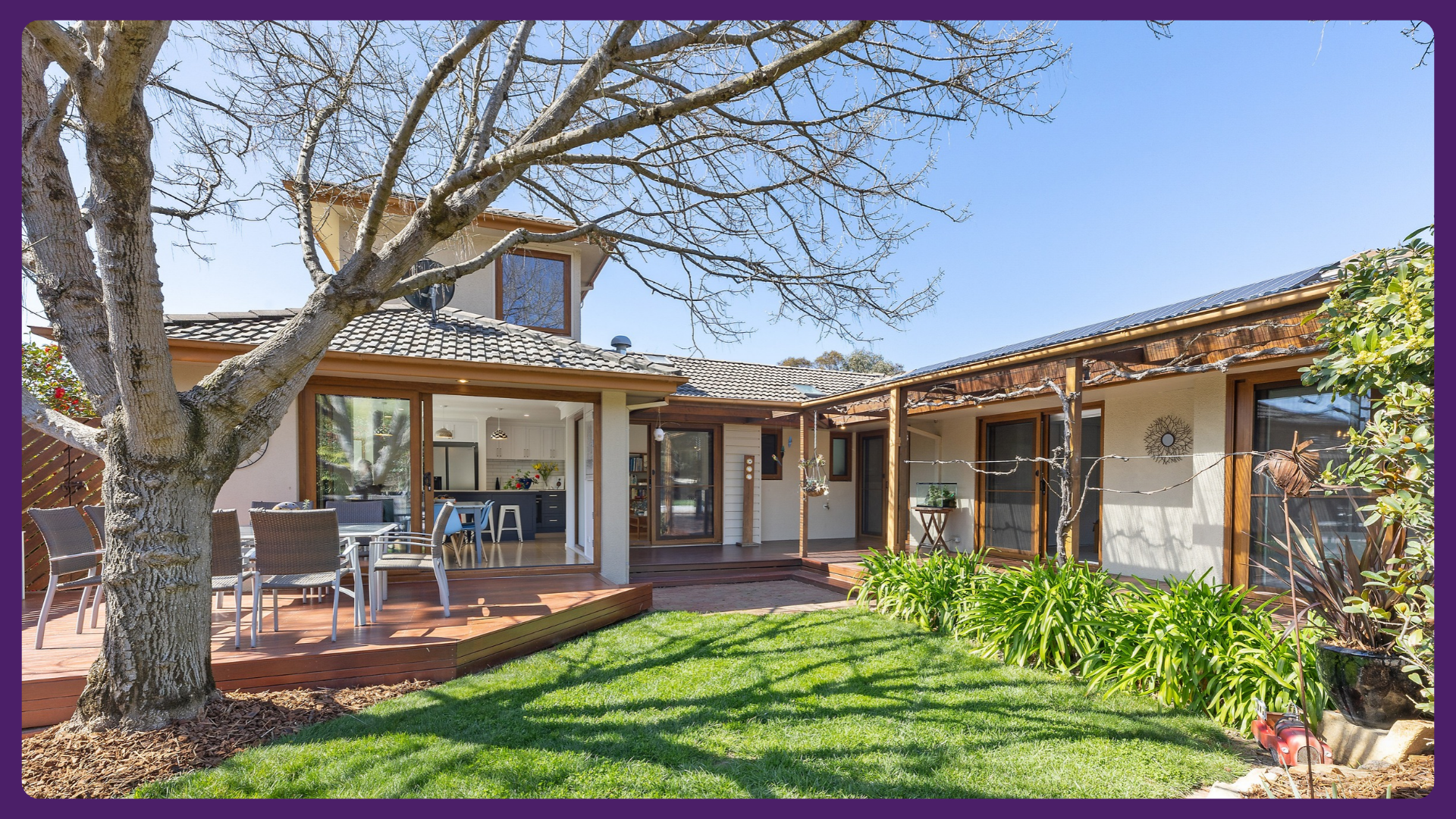
21 Haines Street, Curtin. Photo: ALX Creative Media - Supplied
“Towards the final stages, two bidders became particularly competitive, ultimately driving the result to $1,860,000,” Souweid said.
The campaign attracted families and upgraders, with a young couple purchasing the home. Its architectural character, renovation and established landscaping appealed to buyers, although features including the pool and single-car garage divided opinion.
The result illustrates how differently buyers can value the same property. It does not establish a broader Canberra recovery.
Auction insight
Clearer price information helps, but your own ceiling still matters.
A disclosed reserve can help buyers understand the seller’s expectations. Local research and campaign enquiries may help assess competition. Neither replaces a budget based on your deposit, buying costs and manageable repayments.
An Aussie Broker can help you understand your borrowing power, compare loan options and explore what may be achievable based on your circumstances. Conditional pre-approval provides an indication of potential lending, rather than a guarantee of final approval, which remains subject to lender criteria, valuation and your circumstances.