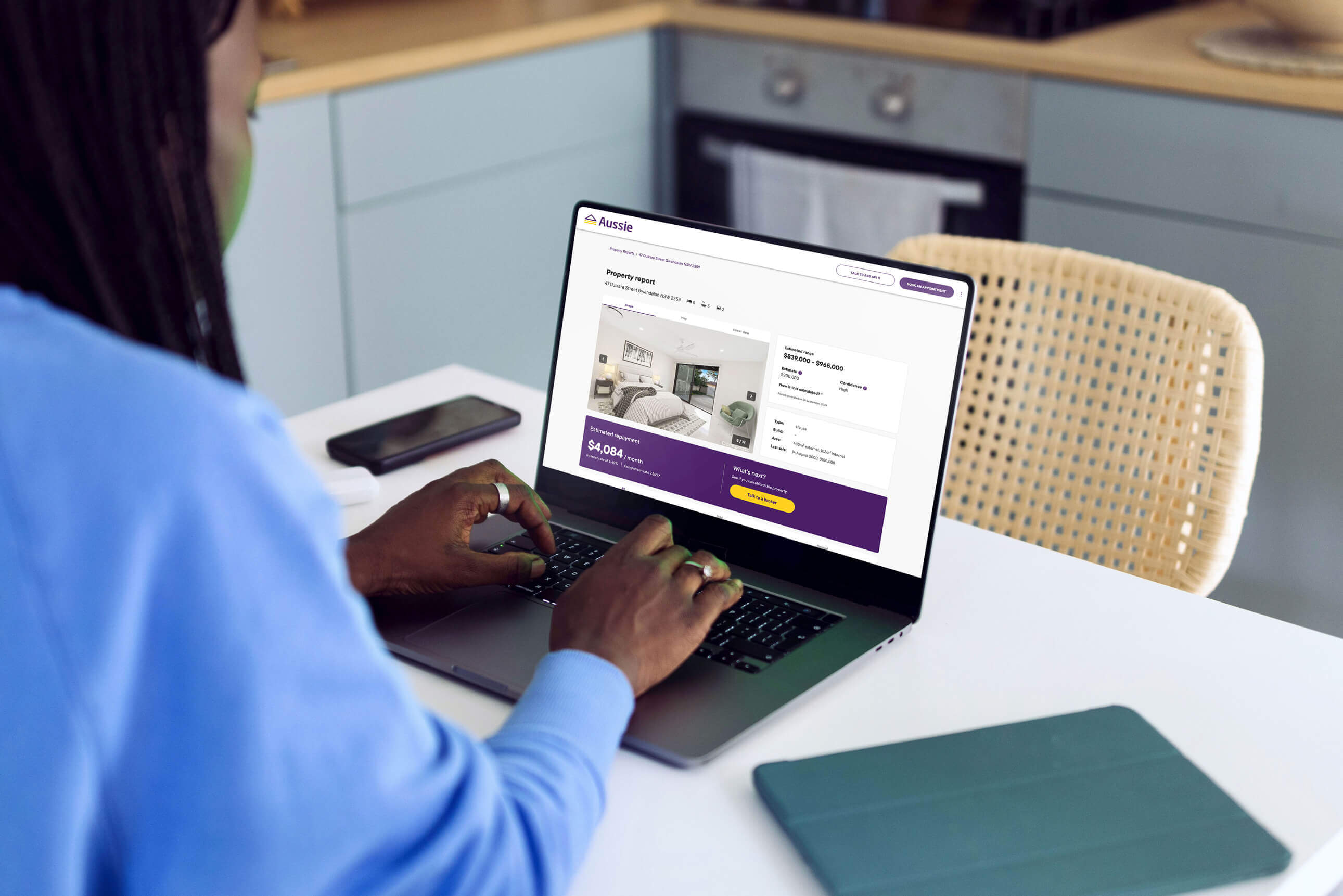
With the right support, the process doesn't have to feel overwhelming.
Applying for a home loan can seem like a maze, especially if it's your first time. Between the forms, the jargon and the paperwork, it's easy to feel you're in over your head. But it can be much simpler with some prep (and the right people in your corner).
At Aussie, we've helped Australians feel more confident about buying property. We'll guide you through the steps, explain the terms, and help you understand what's needed and when.
Whether you're buying your first place or upgrading to your next one, we're here to make it easier.
Here's a step-by-step breakdown of what to expect and how to tackle it.
1. Seek help from a mortgage expert.
A great first step when considering buying a property is getting help from mortgage experts. A mortgage broker is essentially a home loan adviser who knows the ins and outs of obtaining or refinancing a home loan.
They can offer guidance, answer home loan-related questions and act as an intermediary between you and lenders. They can help you:
Figure out your property goals and how you can get there
Navigate the world of financial and home loan jargon
Review your home loan and alternative options
Getting help from a broker is typically free, but this will depend on the broker you go to. At Aussie, all our brokers provide services at no cost^, so you can get home loan help without breaking the bank.
2. Assess your borrowing power.
Before falling in love with a property, knowing your limits is smart. Lenders work out how much you can borrow by looking at:
Your income: Salary, bonuses, rent from investment properties, and benefits
Your expenses: From streaming services to child care and everything in between
Your debts: Personal loans, credit cards (even if they're unused), car loans, HECS/HELP
Your credit history: This shows how reliable you've been with money in the past
Your household setup: Kids, partners, dependants
Your job type: Lenders treat full-time, casual, and self-employed income differently
These numbers are run through lender calculators and "stress tested" to ensure you can still manage repayments if rates increase.
Use our borrowing capacity calculator to estimate your borrowing capacity quickly. It's not a guarantee, but it's a helpful ballpark.
Pro tip from your Aussie Broker:
Use the calculator as a starting point but check in with an Aussie broker for a personalised view based on your individual circumstances.
3. Research and compare home loans.
Not all home loans are the same, and a small difference in rates or features could cost you thousands over the life of your loan. Here's a quick look at your options:
Fixed-rate: steady repayments, great for budgeting
Variable rate: flexible, with potential rate drops (or hikes)
Split loan: a mix of fixed and variable
Interest-only: lower repayments upfront, often used by investors.
Beyond rates, it's worth comparing:
Offset account: Can you link your savings to reduce interest charged?
Redraw facility: Can you access extra repayments later if needed?
Repayment flexibility: Can you pay more without penalty?
Loan fees: Are there setup fees, monthly charges or exit costs?
Loan portability: If you move homes, can you take the loan with you?
Refer to our weekly low rates update (which refreshes every Monday) to compare home loans in Australia and weigh up rates, features, and lenders.
Pro tip from your Aussie Broker:
Your top choice isn't just the cheapest one; it's the one that suits your long-term goals.
You might also be interested in: Types of home loans
4. Get a home loan pre-approval.
Home loan pre-approval (or conditional approval) is when a lender agrees, in principle, to lend a specific amount of money to a borrower for their home loan.
Simply put, it indicates a lender's likelihood to approve you for a certain home loan amount but not an official guarantee. Borrowers typically seek home loan pre-approval when ready to search for a property.
Why shouldn't I skip the home loan pre-approval process?
While it's not a requirement, there are many benefits to getting pre-approved for a home loan. Here are just a few of the reasons you might want to consider getting pre-approved:
Gain confidence in making offers. Knowing how much you'll be able to borrow can give you added reassurance when making offers on properties or bidding at auctions.
Be favoured by vendors. Vendors often favour pre-approved buyers as they can back their offers and settle sooner.
It's free. You typically won't have to pay a cent to get pre-approval.
You can get your pre-approval extended. Pre-approval is usually valid for 3-6 months but can often be extended if you request this from the lender before it expires.
What will you need to apply for pre-approval?
To get pre-approved for a home loan, you'll typically need to provide documents that prove your identity, income and current financial situation. These include:
Identification: primary documents like a valid passport, driver's licence or birth certificate and secondary documents like a medicare card or utility bill
Proof of income: tax returns, payslips and bank statements
Assets: superannuation, savings, shares in stocks, cars or other properties you own
Liabilities: other loans or debts such as credit cards, car loans, and personal loans
Living expenses: monthly expenses such as groceries, rent, bills, transport, recreation and other miscellaneous expenses.
5. Gather essential documents.
Preparing your paperwork can mean the difference between fast approval and frustrating delays. Here's a basic home loan documents checklist:
Driver's licence, passport or birth certificate
Payslips and/or tax returns
Bank statements (3–6 months)
Statements for any existing loans or credit cards
Proof of your deposit or savings
Details of any other income or assets
Not sure where to start? An Aussie broker can help you collect, organise, and submit the right documents, so you can confidently move forward.
6. Submit your home loan application.
Following the steps above, you'll be ready to apply for formal approval (unconditional approval) and finalise your purchase. Your local Aussie Broker can help you apply for and submit your home loan application.
At this stage, if you've already applied for pre-approval, your lender will have your submitted documents ready, so your application can hit the ground running. They may request more recent supporting documents from you, such as bank statements or your latest payslips. If you did not previously get pre-approval, you must supply these documents from scratch.
At this stage, you will also pass your contracts on to your solicitor or conveyancer to read through before you sign to ensure everything is up to scratch. They will also conduct a title search to double-check the owner's name and other details related to the property.
Did you know that Aussie has partnered with Settle Easy to make conveyancing simple, fast, and stress-free? We can arrange a conveyancer for you through Settle Easy, so you don't have to hunt for one mid-move. It's one more way we can help remove the stress of buying a home.
What documents do you need for a mortgage?
Proof of identification: such as a valid passport, driver's licence or birth certificate
Proof of income: such as your recent payslips and latest PAYG statement
Expenses: information on your monthly expenses
Assets: information on your assets such as other properties, cars, shares and savings
Liabilities: statements of any existing debts.
7. Understand your approval and settlement timeline.
There are two types of approvals to know:
Conditional approval is granted based on your initial information
Unconditional approval is confirmed after all checks are complete (this is the green light to settle)
What happens next:
Your lender sends through the loan contract.
Your broker helps review and explain the next steps.
Your conveyancer works with the seller's legal team to book a settlement date.
You do a final inspection of the property.
On settlement day, funds are released and the keys are yours.
8. Settle your home loan.
Settlement is the period when the ownership of a property is transferred from the seller to the buyer. It typically lasts about 30-90 days and is agreed on between the seller and buyer. The settlement period ends when the seller meets the buyer and officially transfers ownership, otherwise known as the settlement date.
During this period, your conveyancer or solicitor should receive all the documents needed to conduct a title and certificate search to make your ownership of the property official.
What happens on settlement day?
On settlement day, you will receive home loan documents to sign. Legal representatives from each party (the buyer, seller and lender) will be in attendance to ensure everything is in order.
The lender will pay the seller on your behalf, and you’ll need to take care of any other upfront costs such as stamp duty and legal fees. Finally, the property is registered under the buyer’s name through the state title office and your new home is officially yours.
What are the common home loan mistakes to avoid?
Applying with multiple lenders. This can hurt your credit score. One strong application (with broker guidance) is better than many weak ones.
Changing jobs or taking on new debt. Wait until after settlement to make big financial moves.
Forgetting extra costs. Budget for stamp duty, LMI, legal fees, inspections, and moving costs.
You might also be interested in: Can I change jobs while buying a home?
Final tips for navigating the process like a pro
Stay financially steady. Lenders love stability.
Lean on your broker. We're here to guide you through every step.
Use Aussie tools like:
Borrowing power calculator to estimate how much you could borrow
Home loan comparison tool to weigh up rates, features and lenders
Mortgage repayment calculator to check what your monthly repayments could look like
Property Experience in the Aussie app to track listings, suburb trends, and even your home equity (if you're already an owner)
Ready to get started?
Book a free^ appointment with an Aussie Broker, and let's talk about your next move. We'll help you navigate the confusion, plan confidently, and simplify your property journey.